Pages

Thursday, 16 September 2010

Let’s Get Baking

As I bake more and more, (I’m now the proud owner of many types of flour and yeast!), I find that I’m slowly learning the art of remaining patient: something I haven’t formerly shown a leaning towards. It’s all in the stretching and proving, and a hot conservatory certainly helps that. Along with this, and the running of The Great British Bake Off, I may even contemplate making my own pastry, something which I’ve previously always stated that life is too short for. The programme has, for me, been a nice combination of watching people like myself ‘having a go’ at something, and teaching me the skills to do so along the way: Learning why bread dough has to be kneaded and stretched and tips for an ‘unsoggy’ bottom to your pie!

So I’m going to use today’s post as a little ‘aide-memoir’.

I’d like to bake:

A proper pie with homemade cheesy short crust pastry

Cornish Pasties

A cob loaf

Seeded spelt bread rolls (although any recipes for such would be greatly received!)

One thing I can’t seem to find, though, are links to the recipes from the programme. Obviously, Paul and Mary’s are up on the bbc food site, but the contestants recipes are strangely absent, (or maybe I just haven’t found them yet!) If you do find them, feel free to comment under this post and add the link!

So, I’m definitely giving some of the ideas a go and will post again when I have been a busy baker in the kitchen.

If you haven't seen it, and are watching it solely for cooking tips, I’d recommend beginning with the Bread episode. Otherwise, as stated by the singing nun, start at the beginning!

Sunday, 12 September 2010

L’Univers, Nice, France – Christian Plumail

Being a regular visitor to France, Nice in particular, then I thought it was about time we compared the Michelin Starriness of haute-cuisine to it’s English competitors. Over the last few years, we’ve been lucky enough to visit several starred restaurants in the UK but our visit to Christian Plumail’s L’Univers was our first European experience.

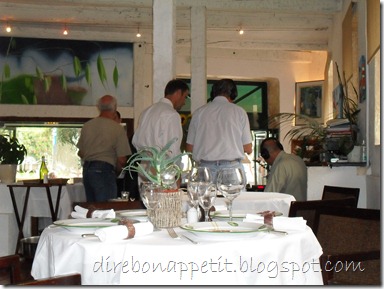
The restaurants is tucked just outside of the old town and facing the Place Massena with it’s strong, structural fountains (and the trams). It doesn’t look like anything special from the outside, or inside, with a series of bright, but slightly strange paintings are displayed: Those ‘love or hate’ types of slightly overweight figures.

To have with our aperitifs, we were served a slice of traditional pissaladiere and some lovely, small black Nicoise olives.

SDC12818

We were seated quickly at a lunch service and began choosing our food! They offer a fantastically priced lunch menu of two courses for just 20 Euros, but since it was our first visit, we opted for more varied dishes on the Menu Saveurs d’Ete, Flavours of Summer.

SDC12819

I’m not going to comment on the plates individually, except to say it was delicious. The flavours were fresh and local, textures well combined, and all beautifully presented.

SDC12820

Amuse-bouche were small raw scallops served with a crab foam. A little too ‘fishy’ for me, but loved by the OH.   SDC12821

SDC12822

To begin, the OH opted for Courgette with courgette mousse, a vegetable type salad and crispy sea food. Mine was the more conservative Crab and tomato roll with a citrus fruit summer salad, comprising grapefruit and fennel!

SDC12826

SDC12828

Main courses were Monkfish served with a Mushroom Fregola Risotto (sort of a Sardinian pasta risotto!) and Iberian Pork Chip topped with onions and cheese,  served with a puree of Cocos de Paimpol, a type of bean.

SDC12830

The cheese course was a simple (I say simple, but would find it difficult to make!) goat’s cheese panacotta served with cereal toast and Muscat grapes.

SDC12836SDC12834 

Puddings were excellent: Figs wrapped and toasted in gingerbread, a nutty nougat and rhubarb sorbet, or in my case, Lemon Verbena cream with brandy snaps, poached white peaches and lemon sorbet. Mmmm…

SDC12838

Served with coffee were a few other delights and the chef even came out for a chat, before, strangely, getting involved in some broadcast with sound people all over the place! Service was good, but not excellent, then, we are in France, and it was at least very friendly! I’m not sure the Michelin inspectors would have appreciated the phaff at the end of the lunch service with the sound men, wires, headphones and general kerfuffle that went on, but we certainly did!

SDC12837

There is a more expensive menu (ours was 44 Euros) at 70, with a great choice and based around flavours from the market in the Cours Saleya, but ours was perfect for a lunchtime treat. With a bottle of Rose to counteract the heat of summer, it was a perfect introduction to the starred restaurants of the South of France. Now, where next?!

Sunday, 5 September 2010

Chutney, Pickle, Jams and Jellies – Autumn Delights

Autumn has officially begun when you start to collect all the gluts of abandoned fruit and veg. and preserve them in some form or other! We, as usual, have had many plums and a few errant courgettes that sort of expanded unnoticed to marrow-size! The tomatoes, as usual, were planted on the late side and were pushed into a shady spot by the need to replant broad beans in their original spot after the snow. So add green tomatoes to the mix and what can you make?

SDC12977

This year, I began with the early cherry plums, making a clear cherry plum jelly to add to stews and casseroles, have with cheese or simply spread on toast, and an infused gin. I borrowed the recipe from The Cottage Smallholder blog, and it’s a case of boiling the fruit half covered in water, then strained overnight. Add a pound of sugar for each pint of juice, simmer gently until setting point is reached.

My next cherry plum adventure is still steeping, as I decided on an infused gin, the recipe of which you can find here. It is, at present, sitting in my garage and being swished around if and when I remember! We’ll see how it turns out nearer Christmas!

On returning from holidays, I couldn’t wait to climb the plum tree and harvest all the scrummy fruit, well, those that hadn’t already been stolen in part by the wasps. As usual, I chose to follow Delia’s advice and turn them into a Windfall Spiced Plum Chutney. I find that the longer you leave this, the more it becomes a pickle, and is more delicious than ever. Another quick and easy way of using up plums is a simple plum jam. For every pound of plums, add a pound of sugar and 1/4 pint of water. Boil until set. I added a little sprinkling of cinnamon too!

Further investigation proved there were overgrown courgettes and green tomatoes to use up too, so for the first time, I tried Hugh F-W and River Cottage’s Glutney. It’s quite similar to the Windfall recipe above, but uses vegetables instead of plums.

SDC12970

Use a kilo of overgrown courgette, or marrow, cooking apples and plums or green tomatoes. Half a kilo of onions, sultanas and soft brown sugar. 3/4 litres of cider of white wine vinegar, topped up to a litre with water, and as many chilli flakes as you dare.  Dice all into cm cubes. Make a spice bag to include a few strands of mace, 12 cloves and peppercorns, a teaspoon of coriander seeds, and roughly chopped thumb-sized piece of fresh ginger. 

SDC12972

Bring slowly to the boil so the sugar dissolves, then simmer for about three hours, until you can see the bottom of the pan when you drag a wooden spoon through the mixture.

As with all chutneys, jams, etc. make sure you sterilise your jars first. I pour boiling water into each, leave to warm, then pop into a warm oven to dry. I also put the filled jars back into the oven  to help seal them.

Now the only thing to do is wait. Most of the above take time to mature, so don’t be tempted to open the chutneys too early – wait and let the flavours mellow, unless, of course, you prefer a sharper taste!

Thursday, 2 September 2010

Fennel, Asparagus and Caerphilly salad

 SDC12671

Easy, healthy and delicious! I know we’re at the end of the asparagus season now, but I’m late in posting this so apologise. Hopefully, you may still be able to find some local spears.

Shave the fennel, slice asparagus really thinly on the diagonal, add some salad leaves and dress with lemon and olive oil. A few gratings of cheese over the top and a sprinkling of herbs! I used this recipe from Mark Hix.

SDC12670

Wednesday, 25 August 2010

Rabbit Stew

Again, this post isn’t one for the squeamish. It was a challenge I wasn’t sure I could do, since it involved furry, cute animals, and I’d never eaten rabbit before. But, being one who believes that if we eat meat, we should have a full understanding of how it gets to our table, I gave it a go, and successfully too!

SDC12754

Again, this is something that is done easily without a knife. Initially, the guts need removing immediately the rabbit is killed as they deteriorate very quickly. Once the stomach area is slit, reach in and remove things such as the kidneys and heart. Interesting fact: you can tell the difference between a skinned rabbit and a skinned cat because the kidneys of a rabbit are not directly opposite each other; one is higher than the other!

First, squeeze down the rabbit’s front to remove anything nasty. Then, bend the rabbit’s legs back at the elbow joint and snap them.

SDC12761

Next, reach inside around it’s middle and using your fingers, get between the skin and the flesh, peeling away round the saddle of the animal. The fur should now be loose all across the back of the rabbit. Then remove the legs from the skins, as you would a baby from a baby-grow. Now, going from the tail, pull the skins up the rabbit and over the head. (The head will come off along with the skins, and if it doesn’t simply twist and discard.) At this point, push your finger (and this isn’t nice but really needs doing,) down through the rabbits bum to get rid of any rabbit poo! You’ll find the little round pellets strung together!

SDC12767

To fillet him, cut through the flesh at the shoulder joints for the legs, then twist off. Chop the saddle into two large chunks for the pot. Add carrot and parsnip, spelt, stock and season well. Cook in a Dutch oven above an open fire.

SDC12768

Saturday, 21 August 2010

Damper Bread for Breakfast

A simple, unleavened bread with many names, this originated in the outback of Australia. And is perfect as a quick breakfast fix to toast on a hot skillet when out in camping.

SDC12717

There’s really nothing to it: take a handful of self-raising flour (or plain with baking powder), and pour in water until you get a dry dough. Add more flour if it becomes too sticky.

SDC12718

Throw in chocolate chips, chopped mars bar, or redcurrants, blackberries, etc. foraged from the woodland, then pat into a very thin circle. The thinner it is, the less doughy the inside one the outside is cooked.

SDC12720

Place on a floured skillet and cook until the outside is golden. Eat while hot!

SDC12725

Wednesday, 18 August 2010

Rainbow Trout – skewered over a fire…

And for lunch the next day? Well, after building a shelter, we all felt we had deserved a good lunch, but first we had to prepare it. Now, there are not many fish around in the woodland so these were ordered in from the local fishmonger, but that didn’t detract from the excitement of preparing it ourselves.

SDC12734

Now, I’ve often filleted my own fish, even a whole salmon at times, but never removed the guts or done so without the main use of a knife!

You use the knife to begin, scoring around the head, without going through the bone, and the tail. Then, it’s simply a question of running your thumb and forefinger down the backbone of the fish, squashing against the bone as you go and thus, pulling the bone away from the fish. I’m not sure it’s a method that John and Greg would think orthodox, but it certainly works and leaves not a shred of flesh left on the bones, even ensuring the pin bones are extracted! I’m giving it a go next time I buy my fish whole!

SDC12742

When done, skewer the double fillet on two small, sharpened stick and wedge into a long, split stick of hazel. Toast over an open, smoky fire, then turn to crispen the skin.

SDC12743

Serve with new potatoes smothered in butter, salt and pepper.

SDC12745

Related Posts Plugin for WordPress, Blogger...
Creative Commons License
This work is licenced under a Creative Commons Licence.